
Imagine this scenario: You’re walking across the parking lot to the grocery store. You’re looking at your phone and carrying all of your bags, as well as keeping an eye out for drivers who might be as distracted as you. As you step off the curb, you realize it’s higher than you thought – and before you know it, you hear a pop and your ankle has twisted sideways (apologies for the graphic description – we know that anyone who’s sprained an ankle in the past just cringed).
What do you do next after an injury?
The most common answer here is RICE: rest, ice, compress, elevate. Since the 1970’s, when Dr. Gabe Mirkin came up with this idea, people all over the world have been wrapping bags of peas around their injuries and holding their injured parts above their heads in hopes that it will help them heal more quickly. But – and humour us on this one – if inflammation is part of our body’s normal healing process, why are we doing something to prevent that? Doesn’t it make more sense to let it happen, so we really recover well?
As it turns out, Dr. Mirkin has changed his mind. In 2015, he published a statement suggesting that new research supports a change to his by then world-famous mnemonic. At the time, there was mounting evidence that ice could diminish swelling, and anti-inflammatory medications could actually delay tissue healing – the direct opposite of what we were all hoping for with RICE.
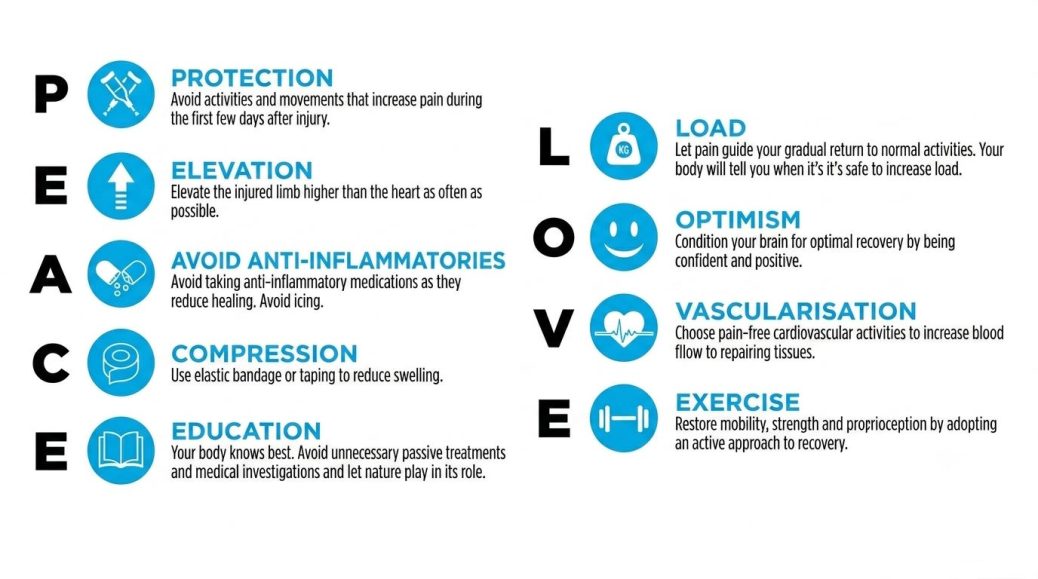
So, if RICE isn’t the answer, what is? In 2019, two Canadian physiotherapists named Jean-Francois Esculier and Blaise Dubois entered the ring with their idea of PEACE and LOVE. This new concept replaced the four suggestions in RICE with nine new ones, designed to direct the acute and sub-acute phases of injury.
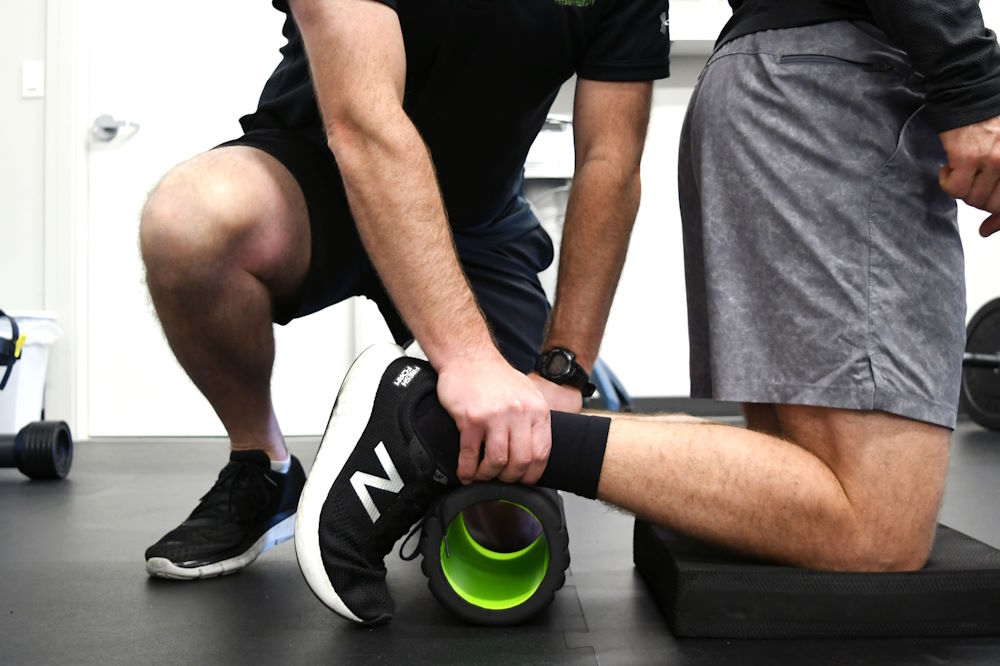 PEACE: The Acute Phase
P – Protection
In the early stages of an injury, the priority is protecting the damaged tissue from further harm. This means offloading or restricting movement of the injured area for the first one to three days, giving your body a fighting chance to begin the healing process.
E – Elevation
Propping the injured limb above the level of your heart helps drain excess fluid away from the area, which is why you’ll often see athletes with a swollen ankle resting it up on a stack of pillows. It’s a simple step, but it makes a real difference in managing that initial swelling surge.
A – Avoid Anti-inflammatories
As counterintuitive as it sounds, reaching for ibuprofen after a sprain may actually work against you. Inflammation is your body’s natural first responder, and interfering with that process in the early stages can slow down tissue repair.
C – Compression
Wrapping the injured area with a bandage or compression sleeve helps limit swelling and provides a degree of support while the tissue is at its most vulnerable. The key is firm but not tight — if your fingers or toes start tingling, it’s too much.
E – Education
One of the most valuable things a physio can offer after an acute injury isn’t a treatment — it’s a conversation. Understanding your injury, setting realistic expectations, and knowing what to do (and what not to do) puts you in control of your own recovery.
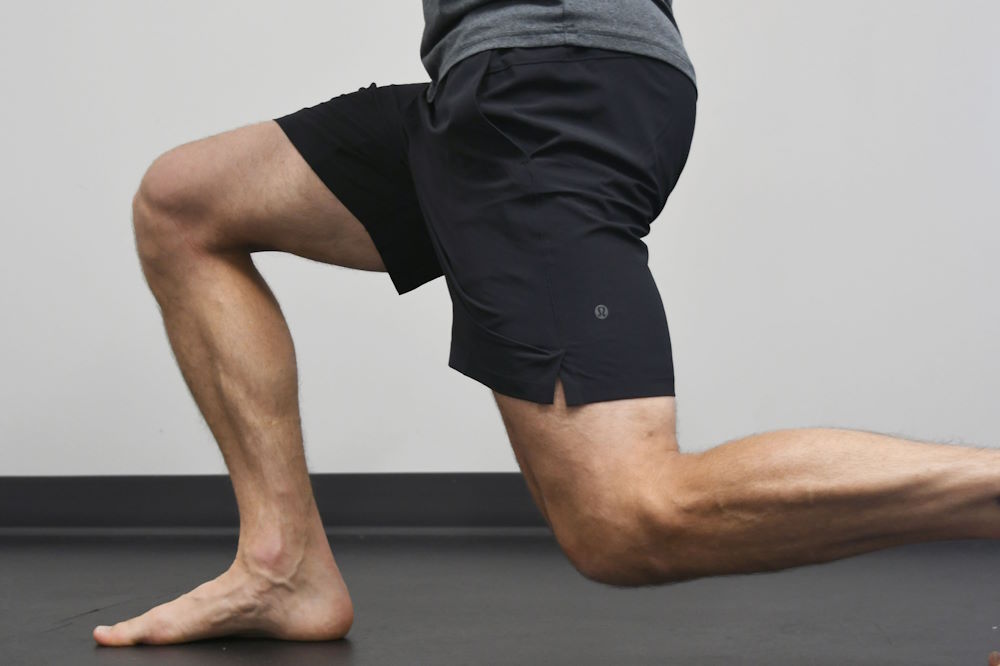 LOVE: The Sub-Acute Phase
L – Load
Once the initial acute phase settles, gradually reintroducing load to the injured tissue is one of the most important things you can do. Tendons, muscles, and ligaments respond to mechanical stress by rebuilding stronger, so gentle, progressive movement is medicine in its own right.
O – Optimism
Recovery isn’t just a physical process — your mindset plays a surprisingly significant role in how well and how quickly you heal. Research consistently shows that people who approach their recovery with realistic confidence tend to get better outcomes than those who catastrophize or fear re-injury.
V – Vascularisation
Getting your blood moving through pain-free cardiovascular activity — think walking, cycling, or swimming — helps deliver oxygen and nutrients to the healing tissue without stressing it. It also keeps your fitness ticking over during a period when you’d otherwise be sitting on the sidelines.
E – Exercise
Progressive, targeted exercise is the backbone of rehabilitation, restoring strength, range of motion, and proprioception after injury. Your physio will guide you through a program that challenges the tissue enough to drive adaptation, without pushing so hard that you set yourself back.
This concept is a great example of a phenomenon that occurs regularly in our world. As we collect more evidence and research data on injury recovery, we find that some long-standing and widely accepted beliefs aren’t completely accurate, and they need to be changed. New research is published every day in our field, and that consistently leads to changes in how we practice and deliver science-backed physiotherapy treatments. Don’t have the capacity to keep up to date with it all? That’s what you’ve got us for!
Research referenced while writing this article:
- https://thesportjournal.org/article/the-r-i-c-e-protocol-is-a-myth-a-review-and-recommendations/
- https://bjsm.bmj.com/content/54/2/72